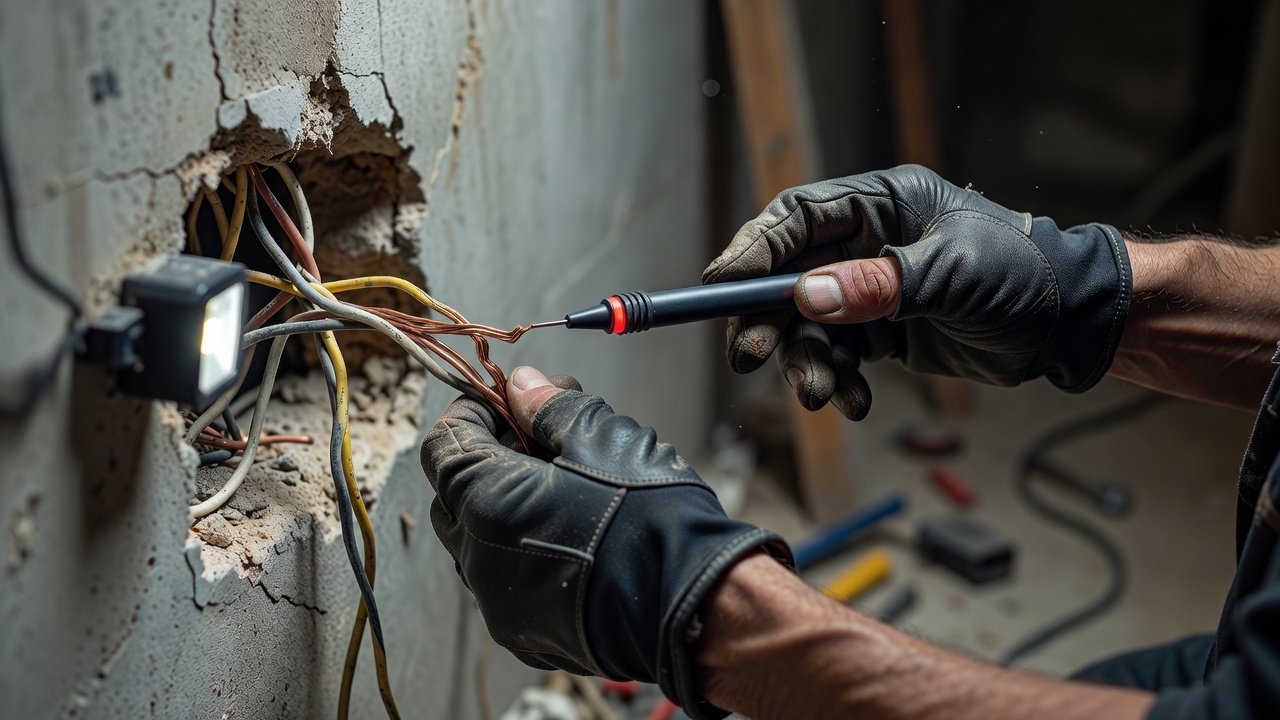
Transitioning to a smart home involves more than just downloading apps and connecting to Wi-Fi. When dealing with smart switches, you are actively modifying the mains electrical system of your residence. While the process is highly standardized, the margin for error is non-existent. Working with high voltage presents severe risks of electrical shock, fire, and catastrophic damage to both your home and the smart devices themselves.
This guide outlines the critical safety protocols, necessary tools, and theoretical knowledge required to understand wall switch installation. Disclaimer: This documentation is for educational purposes only. Local building codes vary globally, and modifying electrical systems should be performed by licensed professionals.
Essential Tools for the Job
Do not attempt electrical work without the proper instrumentation. A basic installation toolkit must include:
- Non-Contact Voltage Tester: A pen-like device that visually and audibly indicates the presence of live alternating current without requiring direct wire contact.
- Digital Multimeter: Crucial for verifying continuity and identifying specific wire types when color coding is unreliable.
- Wire Strippers: Calibrated tools designed to remove wire insulation without scoring or damaging the underlying copper conductor.
- Insulated Screwdrivers: Specifically rated to protect the user from electrical discharge.
- High-Quality Wire Nuts or Wago Connectors: To ensure secure, vibration-resistant connections inside the wall box.
Step One: Total Power Isolation
The cardinal rule of electrical installation is never to work on a live circuit. Relying on a wall switch to cut power to a fixture is insufficient and dangerous, as the wires leading into the switch box remain energized.
Locate your home's main service panel (breaker box). Identify the circuit breaker corresponding to the room you are working in and switch it to the OFF position. Return to the room and verify that the lights do not turn on. However, this visual check is not enough.
Unscrew the existing faceplate and carefully pull the "dumb" switch away from the wall. Use your non-contact voltage tester on every single wire inside the junction box. It is entirely possible for a single wall box to contain wires from multiple different circuits (e.g., a multi-gang box controlling hall lights on one breaker and porch lights on another). Proceed only when the voltage tester confirms all wires in the box are dead.
Decoding the Wiring Topography
Standard residential switches generally rely on four distinct types of wiring connections. Note that color coding is heavily dependent on regional standards (e.g., US vs. UK/EU) and the age of the building. Never trust a wire's function solely based on its color.
1. The Line (Hot) Wire
This wire carries incoming power from the breaker panel to the switch. In US homes, this is typically black. It is the wire that will test "live" if the breaker is turned on.
2. The Load (Switch Leg) Wire
This wire carries power from the switch to the light fixture. It is only energized when the switch is in the "on" position. In older US homes, this is also frequently black or sometimes red. Identifying which black wire is line and which is load often requires using a multimeter while the power is carefully switched on (a process best left to professionals).
3. The Ground Wire
Essential for safety, the ground wire provides a safe path for electrical current in the event of a short circuit. It is typically bare copper or sheathed in green insulation.
4. The Neutral Wire
The most critical wire for smart switch installation. A standard dumb switch interrupts the hot wire and does not require a neutral. A smart switch contains a tiny computer that needs constant power. The neutral wire provides the return path for this constant power, completing the circuit independently of the light bulb.
In US construction post-1980s, the neutral wire is typically white and found bundled together with a wire nut at the back of the junction box, passing through without connecting to the old switch. If you open your box and only see two wires connected to the switch and a ground, and no white bundle in the back, you do not have a neutral wire at that location. In this scenario, you must either use a specialized "no-neutral" smart switch or have an electrician run a new wire.
Making Secure Connections
Once you have identified the wires and verified power is off, you can disconnect the old switch. When installing the new smart switch, secure connections are paramount. Loose connections cause electrical arcing, generating extreme heat that can lead to electrical fires.
If using traditional wire nuts, ensure the exposed copper ends are straight and held parallel before twisting the nut on clockwise. The nut should bite into the wires and feel rigid. Give each wire a gentle tug to ensure it is locked in place. Many professionals now prefer lever-actuated terminal blocks (such as Wago connectors) for their reliable, visually verifiable connections and compact size, which is highly beneficial given how bulky smart switches can be.
Box Depth and Overcrowding
Smart switches are significantly larger than traditional mechanical relays due to the internal electronics. Older homes may feature shallow junction boxes that simply cannot accommodate the depth of a smart switch alongside the necessary wiring bundles.
Never forcefully cram a smart switch into a box. Forcing it can severely damage the switch casing, strip wire insulation, or cause wires to disconnect from their terminals. If the box is too small, an electrician will need to cut the drywall and install a deeper "old work" junction box before you can proceed.
When to Call a Professional
Smart home enthusiasm should never supersede personal safety or property integrity. If you encounter aluminum wiring (common in the 1960s and 70s, requiring special handling to prevent fire), lack a ground wire, find heavily degraded or crumbly insulation, or simply feel unsure about identifying the line and load wires, stop immediately. Consulting a licensed electrical contractor is the only responsible course of action.